How to Track Fuel, Maintenance, and Repair Costs
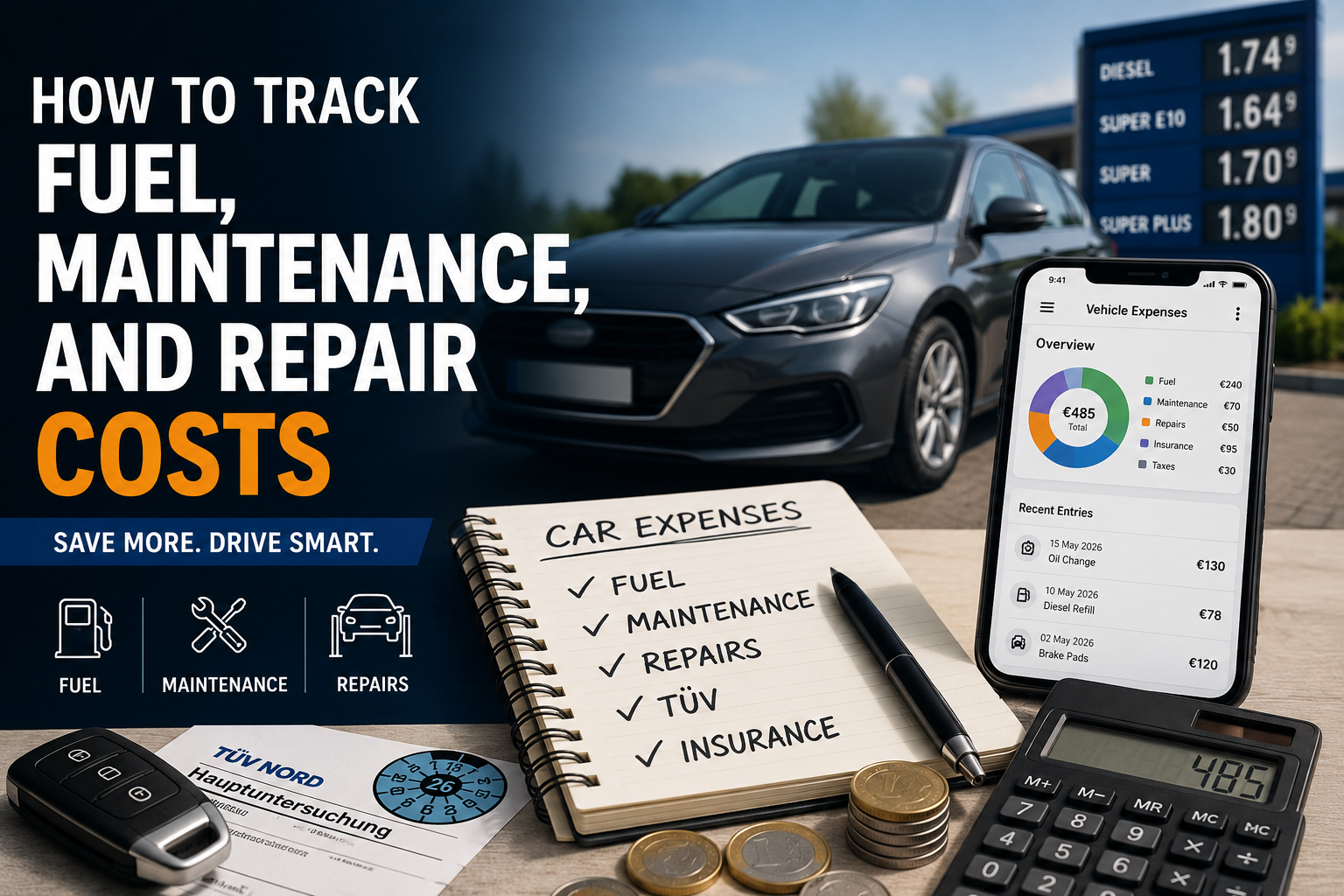
Managing vehicle expenses is becoming increasingly important for drivers in Germany. With rising fuel prices, expensive repairs, insurance costs, and regular TÜV inspections, understanding your real vehicle expenses can save hundreds or even thousands of euros every year.
Category
Vehicle Expense Tracking
Updated
Jun 2026
Fahrnex note
The calmest maintenance decisions usually come from keeping dates, receipts, and service history connected instead of scattered.
Whether you drive a personal car, own multiple vehicles, or manage a small fleet, tracking fuel, maintenance, and repair costs helps you stay organized, reduce unnecessary spending, and keep your vehicle in better condition.
This guide explains how drivers in Germany can properly track vehicle expenses and make smarter financial decisions.
Why Tracking Vehicle Costs Matters
Most drivers only notice major expenses like insurance or unexpected repairs. However, many smaller costs accumulate quietly over time.
Without proper tracking, it becomes difficult to:
- Understand your real monthly vehicle expenses
- Monitor fuel consumption
- Detect mechanical problems early
- Prepare for TÜV inspections
- Avoid missed maintenance intervals
- Compare workshop costs
- Improve resale value
Accurate tracking gives you a complete overview of your vehicle’s operating costs.
Keep the next vehicle deadline visible without scattered paperwork.
Fahrnex connects reminders, documents, and service history so inspections and maintenance are easier to plan before they become urgent.
Create a free accountMain Vehicle Expenses You Should Track
Vehicle ownership costs usually fall into three main categories:
1. Fuel Costs
Fuel is often the biggest recurring expense for vehicle owners in Germany.
You should record:
- Fuel type (Diesel, Petrol, Hybrid, Electric)
- Fuel price per liter or kWh
- Quantity filled
- Total amount paid
- Odometer reading
- Fuel station
- Driving range
Why Fuel Tracking Is Important
Tracking fuel usage helps you:
- Monitor fuel efficiency
- Detect engine problems early
- Compare fuel station prices
- Reduce unnecessary fuel consumption
- Estimate monthly transportation costs
A sudden increase in fuel consumption may indicate issues such as:
- Incorrect tire pressure
- Dirty air filters
- Engine inefficiencies
- Brake problems
- Aggressive driving habits
2. Maintenance Costs
Maintenance includes all planned and preventive services required to keep your vehicle in good condition.
Examples include:
- Oil changes
- Brake service
- Tire replacement
- Battery replacement
- Air filter replacement
- Transmission service
- Timing belt replacement
- TÜV preparation
Why Maintenance Tracking Matters
Preventive maintenance helps avoid expensive repairs later.
Organized maintenance records help you:
- Avoid missing service intervals
- Increase vehicle lifespan
- Maintain warranty history
- Improve resale value
- Reduce long-term repair costs
In Germany, complete maintenance history is especially valuable when selling a used car.
3. Repair Costs
Repairs are unexpected expenses caused by vehicle failures or damage.
Examples include:
- Engine repairs
- Suspension repairs
- Electrical problems
- Air conditioning repair
- Accident damage
- Alternator replacement
- Starter motor replacement
Why Repair Tracking Is Important
Tracking repairs allows you to:
- Identify recurring problems
- Compare garage costs
- Detect unreliable vehicles
- Decide whether repair or replacement is more economical
If repair costs continue increasing every year, replacing the vehicle may become financially smarter.
Best Ways to Track Vehicle Expenses
There are several methods drivers use to manage vehicle costs.
Method 1: Spreadsheet Tracking
Many vehicle owners use:
- Microsoft Excel
- Google Sheets
- Apple Numbers
A simple table may include:
| Date | Category | Description | Cost | Mileage |
|---|---|---|---|---|
| 10 May 2026 | Fuel | Diesel refill | €78 | 124,500 km |
| 15 May 2026 | Maintenance | Oil change | €130 | 125,000 km |
Advantages
- Free
- Flexible
- Easy to customize
Disadvantages
- Manual data entry
- Easy to forget updates
- No automatic reminders
- Difficult for multiple vehicles
For single vehicles, spreadsheets may work well. For larger fleets, they quickly become difficult to manage.
Method 2: Keeping Physical Receipts
- Some drivers store paper invoices and workshop receipts in the glove box, a folder, or a home filing system.
Advantages
- Useful for warranty claims
- Helpful for legal documentation
Disadvantages
- Easy to lose documents
- Difficult to search
- No analytics or reporting
- No maintenance reminders
This method is becoming outdated for modern vehicle management.
Method 3: Using Vehicle Maintenance Software
Digital vehicle maintenance platforms simplify cost tracking and maintenance management.
Typical features include:
- Fuel logging
- Maintenance reminders
- Repair history
- Mileage tracking
- Expense analytics
- Document storage
- Multi-vehicle management
For many drivers and businesses in Germany, digital systems are the most efficient solution.
What Information Should You Record?
Fuel Log Information
Record:
- Date
- Odometer reading
- Fuel quantity
- Fuel price
- Total cost
- Fuel station
- Notes
Maintenance Record Information
Record:
- Service type
- Workshop name
- Invoice amount
- Mileage
- Replaced parts
- Next service date
Repair Record Information
Record:
- Problem description
- Repair details
- Parts replaced
- Labor cost
- Warranty information
- Repair duration
How to Calculate Monthly Vehicle Costs
- A simple formula:
Monthly Vehicle Cost = Fuel + Maintenance + Repairs + Insurance + Taxes
Example
| Expense Type | Monthly Cost |
| Fuel | €240 |
| Maintenance | €70 |
| Repairs | €50 |
| Insurance | €95 |
| Taxes | €30 |
Total Monthly Vehicle Cost = €485
Cost Per Kilometer Calculation
One of the most useful metrics for vehicle owners is cost per kilometer.
Cost Per Kilometer = Total Vehicle Expenses ÷ Distance Driven
Example
- Total yearly expenses: €6,000
- Distance driven: 24,000 km
Cost per kilometer = €0.25/km
This metric is especially useful for:
- Fleet operators
- Delivery services
- Company vehicles
- Mileage reimbursement calculations
Final Thoughts
Tracking fuel, maintenance, and repair costs is one of the best ways to control vehicle expenses in Germany.
With accurate records, drivers can:
- Reduce unnecessary spending
- Improve fuel efficiency
- Prevent expensive breakdowns
- Extend vehicle lifespan
- Make smarter financial decisions
Whether you own one car or manage multiple vehicles, organized tracking provides better visibility, fewer surprises, and lower long-term costs.
Digital vehicle maintenance platforms like Fahrnex make it easier to manage all vehicle expenses, maintenance schedules, and service history in one place.
Frequently asked questions
How to Track Fuel, Maintenance, and Repair Costs?
The best vehicle expense system is simple enough to keep using and structured enough to support real decisions.
What should drivers or fleet teams do next?
Log the expense type, amount, date, and any supporting document immediately. Keep fuel, maintenance, and repairs separate so trend analysis stays meaningful. Fahrnex helps keep these tasks visible in one place.
Why should I track fuel, maintenance, and repair costs?
Tracking vehicle expenses helps you understand the real cost of ownership, improve fuel efficiency, avoid expensive breakdowns, and make smarter financial decisions.
What is the best way to track vehicle expenses?
The best method depends on your needs. Many drivers use spreadsheets, while others prefer digital vehicle maintenance platforms that provide automatic reminders, expense reports, and service history management.
How often should I update my vehicle expense records?
It is best to update records immediately after fuel refills, maintenance services, or repairs. Regular updates provide more accurate insights and help avoid missing important information.
Can tracking vehicle expenses save money?
Yes. Tracking expenses helps identify high fuel consumption, recurring repairs, and unnecessary spending. It also encourages preventive maintenance, which often reduces long-term repair costs.
Can businesses benefit from vehicle cost tracking?
Absolutely. Businesses and fleet operators use expense tracking to reduce operating costs, improve vehicle reliability, manage maintenance schedules, and monitor fuel efficiency.
What are the benefits of digital vehicle maintenance software?
Digital platforms help drivers manage fuel logs, maintenance schedules, repair history, mileage tracking, expense reports, and reminders in one centralized system.
Keep exploring