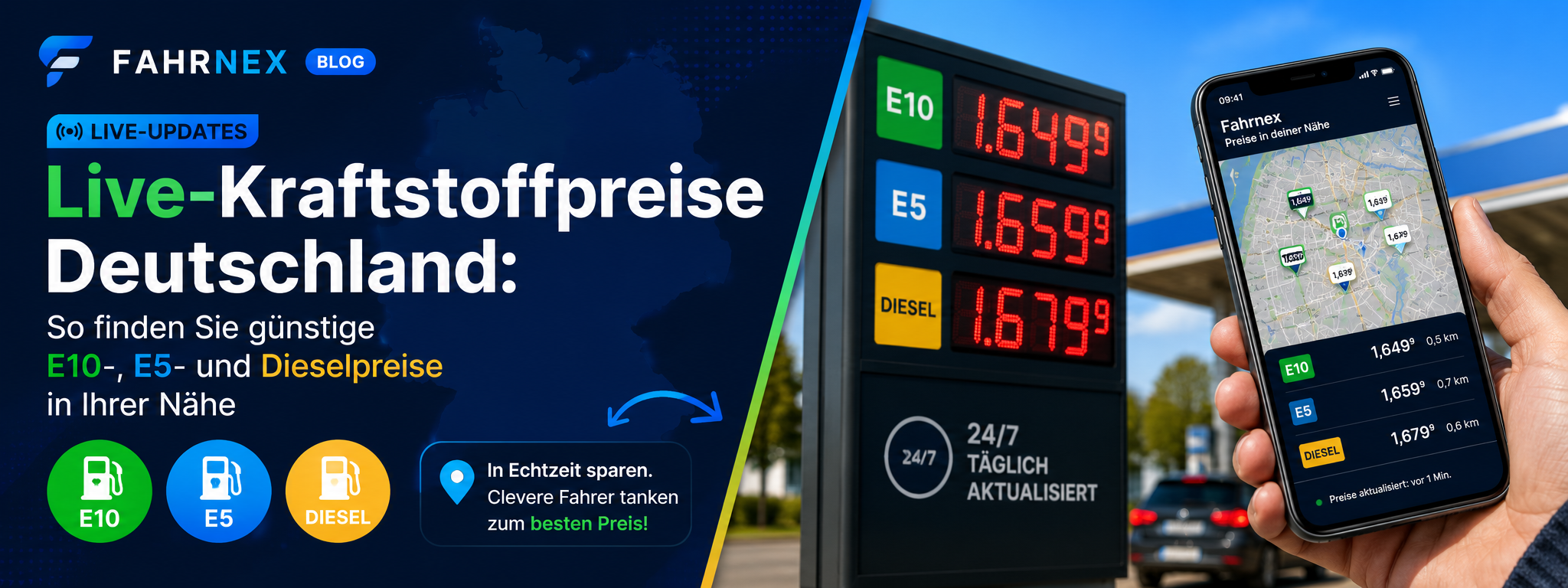
Live Fuel Prices Germany: How to Find the Cheapest E10, E5, and Diesel Near You
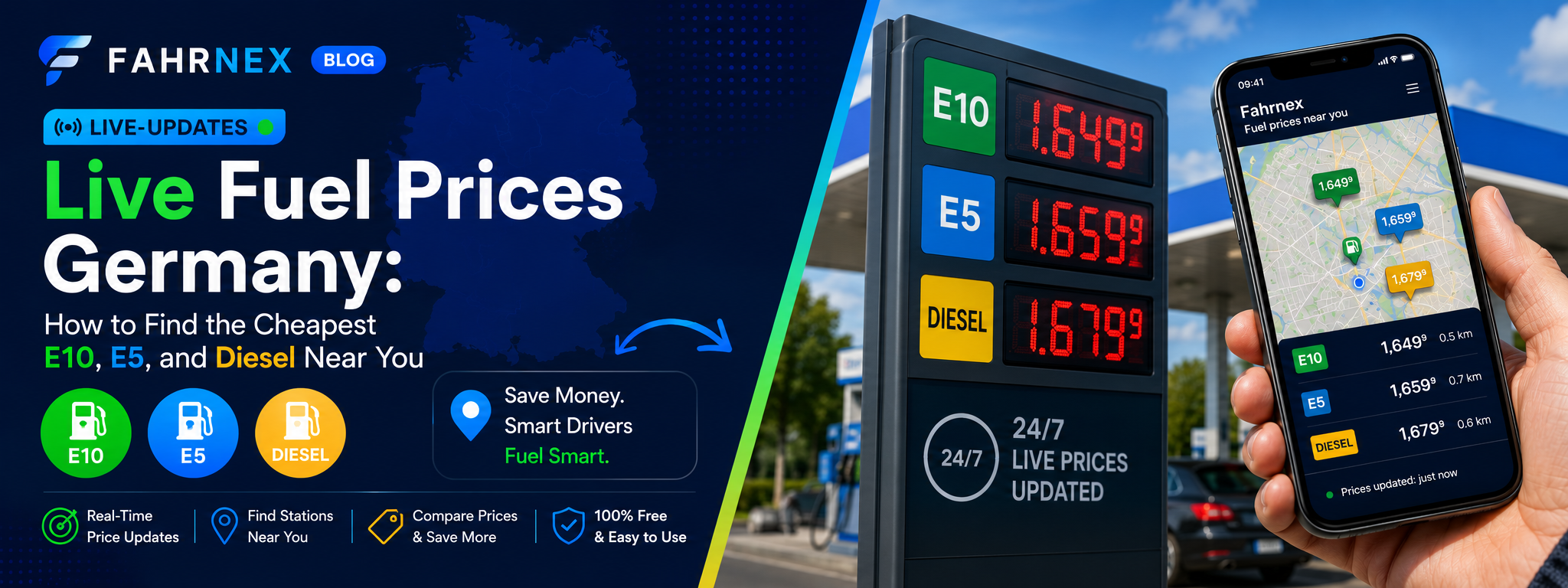
Fuel prices in Germany can change quickly, and the gap between one station and the next is often large enough to matter. For private drivers, that difference can quietly inflate the monthly cost of commuting. For multi-vehicle households and fleet teams, the effect is even more visible because a small price gap becomes a repeated operating cost. That is why a live fuel prices Germany tool is useful: it helps you compare nearby E10, E5, and diesel prices before you leave, instead of relying on guesswork, memory, or a long detour through several apps.
Category
Vehicle Expense Tracking
Updated
Jun 2026
Fahrnex note
The calmest maintenance decisions usually come from keeping dates, receipts, and service history connected instead of scattered.
The goal is not to obsess over every cent. The goal is to make a fast and informed decision. When a tool shows current prices, location-aware nearby stations, and a clear cheapest-versus-nearest view, it becomes much easier to decide whether a lower price is worth the extra distance. The live fuel prices page gives you a cleaner view of nearby stations in Germany, with filters for fuel type, radius, and sorting, so the result is easier to scan and act on.
Why live fuel prices matter in Germany
Germany has a highly visible fuel market, but it is not a uniform one. Prices can differ between neighborhoods, ring roads, motorway locations, and urban side streets. Timing also matters. Drivers often notice that the same station looks different in the morning than it does later in the day. If you only fill up when the tank is already low, you usually lose the chance to compare calmly.
Using live price data changes that rhythm. Instead of discovering the price only when you are already standing at the pump, you can compare stations around your route first. That makes the decision more deliberate. It also reduces the tendency to choose the first visible station simply because it is convenient in the moment.
- Private drivers get a quick way to reduce routine fuel spend.
- Families with more than one vehicle get better visibility across recurring weekly costs.
- Fleet teams gain one more practical signal for controlling day-to-day operating expenses.
Keep the next vehicle deadline visible without scattered paperwork.
Fahrnex connects reminders, documents, and service history so inspections and maintenance are easier to plan before they become urgent.
Create a free accountWhat makes E10, E5, and diesel comparisons useful
2This matters because not every cheapest station is the best choice. A station that is only one or two cents lower may not be worth the extra drive if it adds time, traffic, or unnecessary distance. In other cases, the price gap is large enough that the detour makes sense. Good UX helps you see that tradeoff in seconds.
The most useful fuel-price tool is the one that helps you make a fast local decision with the least friction.
Cheapest station versus nearest station
2Best practices before you fuel up
- Check prices before you leave when possible, not only when the tank is already critical.
- Use the correct fuel-type filter so the list reflects your real options.
- Compare cheapest and nearest together instead of treating them as the same decision.
- Use live prices as one part of a larger cost-control workflow, especially if you manage multiple vehicles.
- Keep related cost tools nearby so fuel decisions connect to longer-term expense visibility.
Final takeaway
A good live fuel price experience should be fast, understandable, and genuinely useful. Users should be able to open the page, check current local prices, understand the cheapest-versus-nearest tradeoff, and act without friction. That is what makes a public tool worth returning to. If you want a simple way to compare nearby E10, E5, and diesel stations in Germany, start with the Fahrnex Live Fuel Prices Germany tool and pair it with the Fuel Cost Calculator when you want a broader view of your driving costs.
Frequently asked questions
How do I find the cheapest fuel station near me in Germany?
Use a live fuel price tool that supports your current location, fuel-type filters, and sorting by cheapest price. The Fahrnex live fuel prices page helps you compare nearby E10, E5, and diesel stations quickly.
Is the cheapest fuel station always the best choice?
Not always. A slightly cheaper station may be farther away, so the better choice depends on both price and distance. That is why comparing the cheapest and nearest station together is more useful than looking at price alone.
Can I compare E10, E5, and diesel separately?
Yes. A proper fuel-price tool should let you filter by the fuel type your vehicle actually uses. This keeps the results clearer and avoids wasting time scanning stations that are not relevant to your next fill-up.
Why does current location matter for fuel-price search?
Current location makes the results immediately relevant. Instead of checking a broad region manually, you can see nearby stations, compare local prices, and decide faster whether the cheapest or nearest option is the better fit.
How does live fuel price checking help with vehicle cost control?
It improves one of the most frequent cost decisions drivers make. Over time, combining live price checks with tools such as the Fuel Cost Calculator helps users understand both immediate savings and broader fuel spending trends.
Keep exploring