TÜV Checklist Germany: What to Prepare Before Inspection
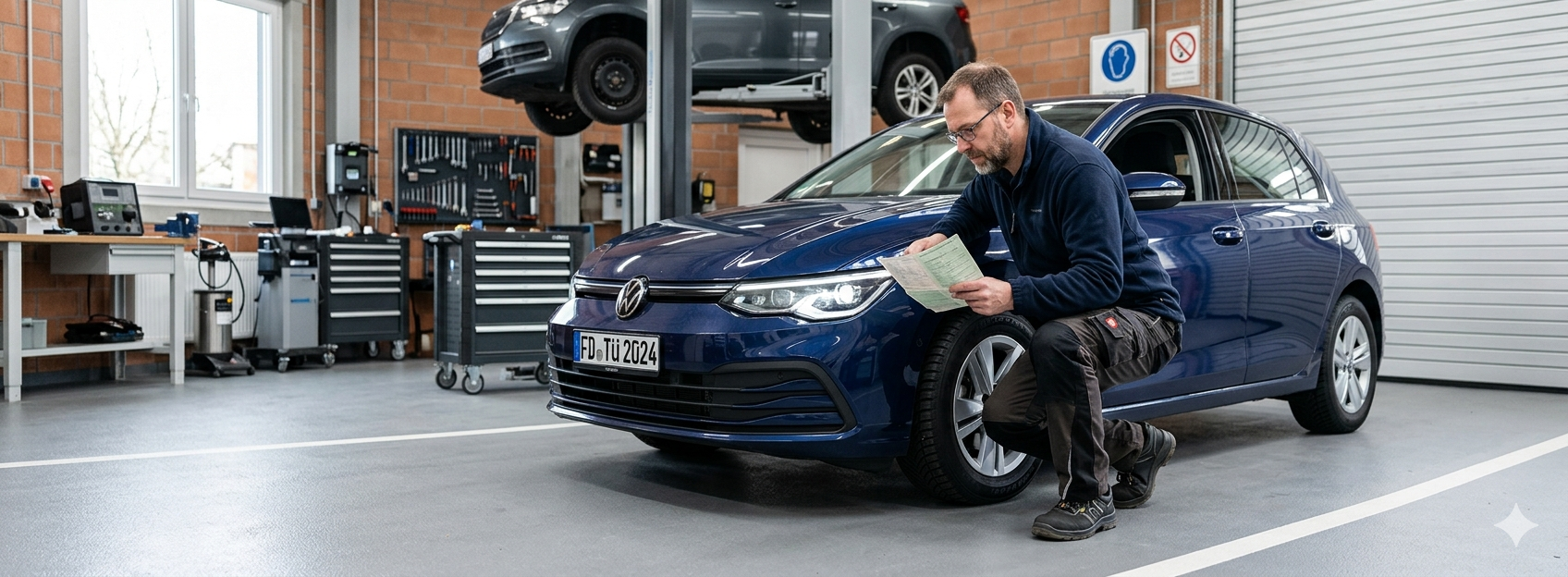
For many drivers in Germany, the TÜV appointment is something they only think about when the deadline is approaching.
Category
TÜV & Legal Germany
Updated
Jun 2026
Practical note
Legal vehicle deadlines are easier to manage when the date, certificate, and follow-up actions stay visible in one place.
Unfortunately, that's often when small problems become expensive ones.
Every year, vehicles fail their inspection because of issues that could have been identified in advance—burnt-out bulbs, worn tires, warning lights, or missing documentation.
The good news is that a simple pre-inspection check can significantly improve your chances of passing the inspection on the first attempt.
In this guide, you'll learn:
- What to check before your TÜV appointment
- Which documents to bring
- Common reasons vehicles fail
- How to avoid re-inspection fees
- Practical preparation tips used by experienced vehicle owners
Whether you're a German resident, an expat, a fleet manager, or a company car driver, this TÜV checklist will help you prepare with confidence.
Quick Answer
Quick Answer:
Before your TÜV inspection in Germany, check your vehicle's lights, tires, brakes, windshield wipers, fluid levels, dashboard warning lights, and required documents. Most inspection failures result from simple defects that can be identified and corrected before the appointment, saving time and avoiding re-inspection costs.
Keep the next vehicle deadline visible without scattered paperwork.
Fahrnex connects reminders, documents, and service history so inspections and maintenance are easier to plan before they become urgent.
Create a free accountWhy Should You Prepare Before a TÜV Inspection?
Germany's vehicle inspection system is designed to ensure road safety and legal compliance.
A failed inspection can lead to:
- Re-inspection fees
- Additional workshop visits
- Unexpected repair costs
- Delays in selling or registering a vehicle
- Lost time
Spending 20–30 minutes checking your vehicle before the appointment can help prevent many common problems.
If you're unfamiliar with the inspection process itself, read our complete guide to HU and AU inspections in Germany.
TÜV Checklist Germany: What to Check Before Your Appointment
Check All Vehicle Lights
Lighting defects are among the most common reasons vehicles receive inspection defects.
Inspect:
- Low beams
- High beams
- Parking lights
- Turn signals
- Brake lights
- Reverse lights
- Fog lights
- License plate lights
Practical Example
A driver arrives for inspection with a defective license plate light. The repair costs only a few euros, but the defect can still lead to additional inspection requirements.
Checking your lights beforehand takes only a few minutes.
Inspect Your Tires
Tires play a critical role in vehicle safety.
Tread Depth
Germany's legal minimum tread depth is:
- 1.6 mm
Recommended:
- Summer tires: at least 3 mm
- Winter tires: at least 4 mm
Tire Condition
Check for:
- Cracks
- Bulges
- Uneven wear
- Sidewall damage
Tire Pressure
Incorrect tire pressure can affect handling, braking performance, and tire wear.
Check Your Brakes
Brake-related defects are a common cause of inspection failures.
Watch for:
- Grinding noises
- Vibrations during braking
- Reduced braking performance
- Warning lights
If anything feels unusual, consider having the brakes inspected before the appointment.
Check Windshield Wipers and Visibility
Good visibility is essential for safe driving.
Inspect:
- Wiper blades
- Windshield condition
- Washer nozzles
- Washer fluid
Common issues include:
- Streaking
- Torn rubber blades
- Empty washer fluid reservoirs
Verify Fluid Levels
Before your inspection, check:
- Engine oil
- Coolant
- Brake fluid
- Windshield washer fluid
Low fluid levels may indicate maintenance issues that should be addressed.
Check Dashboard Warning Lights
Dashboard warnings should never be ignored before an inspection.
Pay attention to:
- Check engine light
- ABS warning light
- Airbag warning light
- Brake warning light
Certain warning lights may affect both the roadworthiness inspection and emissions testing.
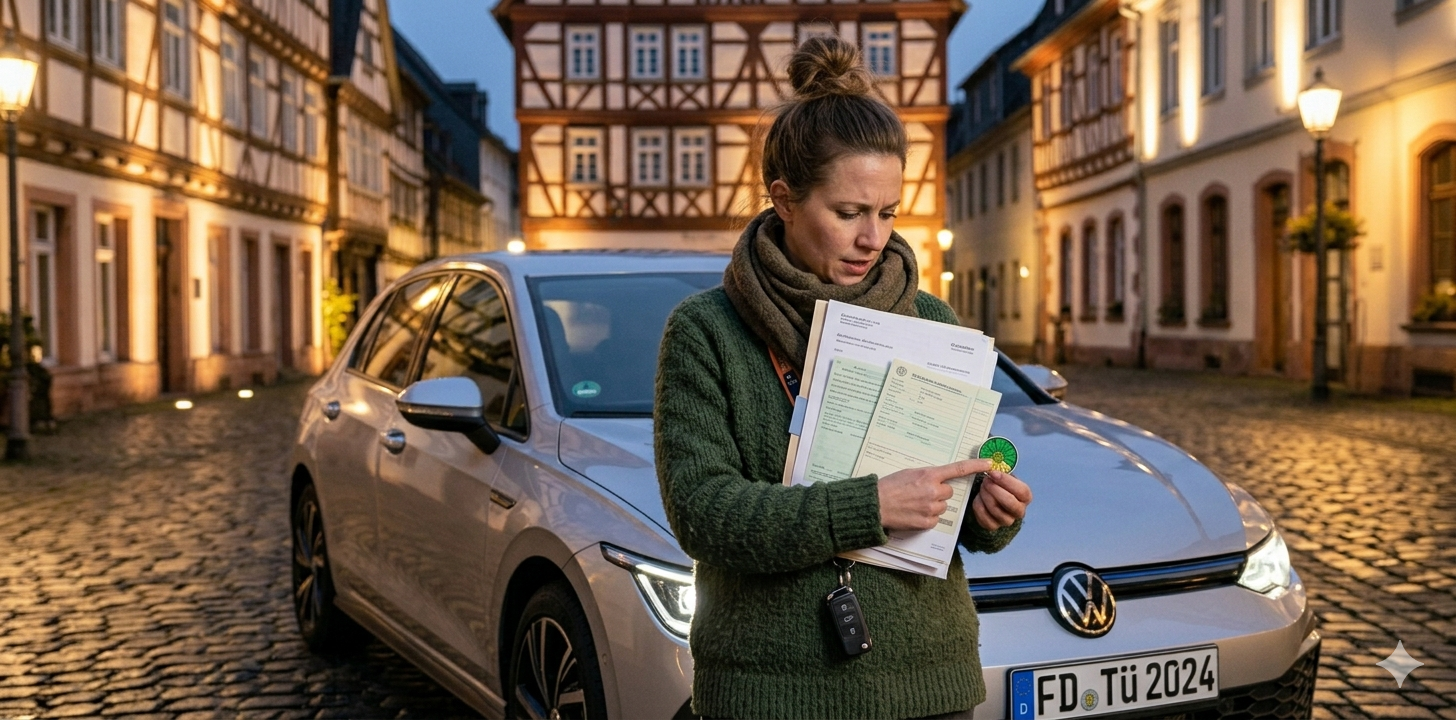
Which Documents Should You Bring to the TÜV Appointment?
Many drivers focus on the vehicle but forget about the paperwork.
Vehicle Registration Certificate
Bring:
- Registration Certificate Part I
- Vehicle registration document
This is required for the inspection.
Previous Inspection Reports
Previous inspection certificates can help document earlier repairs or recurring issues.
Documentation for Modifications
If your vehicle has been modified, bring any relevant documentation.
Examples include:
- Suspension modifications
- Special wheels
- Tow bars
- Performance upgrades
Supporting documents may be required during the inspection.
Common Reasons Vehicles Fail TÜV
Understanding common defects helps you focus on the most important areas.
Faulty Lighting
Burnt-out bulbs remain one of the most frequent issues.
Worn Tires
Insufficient tread depth is a regular inspection failure.
Oil Leaks
Engine and transmission leaks are often identified during inspections.
Brake Problems
Uneven braking performance or excessive wear can result in defects.
Suspension and Steering Defects
Inspectors pay close attention to:
- Shock absorbers
- Bushings
- Joints
- Steering components
TÜV Preparation for Petrol, Diesel, and Electric Vehicles
Petrol Vehicles
Pay special attention to:
- Check engine lights
- Exhaust systems
- Catalytic converters
Diesel Vehicles
Common inspection concerns include:
- Diesel particulate filters
- Emissions performance
- Excessive smoke
Electric Vehicles
A common misconception is that electric vehicles do not require TÜV inspections.
In reality, electric vehicles are also subject to regular inspections.
Inspectors examine:
- Brakes
- Tires
- Suspension
- Lighting
- Visible high-voltage components
When Should You Book Your TÜV Appointment?
Many drivers wait until the last moment.
A better strategy is to:
- Plan 4–8 weeks in advance
- Allow time for repairs
- Avoid last-minute scheduling problems
For inspection schedules and deadlines, see our guide to TÜV inspection intervals in Germany.
What Happens If You Ignore Preparation?
Failing to prepare can lead to:
- Inspection defects
- Re-inspection fees
- Additional appointments
- Delays and inconvenience
If your inspection date has already passed, read our guide on what happens if TÜV expires in Germany.
TÜV Checklist for Company Cars and Fleets
Inspection preparation becomes more complicated when managing multiple vehicles.
Common challenges include:
- Different inspection schedules
- Missing paperwork
- Incomplete maintenance records
For fleet managers, proactive tracking is often more important than the inspection itself.
Digital TÜV Tracking with Fahrnex
Many vehicle owners still rely solely on the inspection sticker.
A more reliable solution is digital vehicle management.
With Fahrnex, you can:
- Track upcoming TÜV deadlines
- Store inspection certificates
- Organize vehicle documents
- Record maintenance history
- Manage multiple vehicles in one place
This helps reduce the risk of missed inspections and lost records.
Conclusion
A successful TÜV inspection often starts long before the appointment itself.
By following this TÜV checklist for Germany, you can identify common defects, prepare the necessary documents, and reduce the likelihood of costly re-inspections.
A little preparation today can save considerable time and expense later.
With Fahrnex, you can keep inspection dates, maintenance records, and vehicle documents organized in one place.
Frequently asked questions
TÜV Checklist Germany: What to Prepare Before Inspection?
A little preparation can improve your chances of passing the inspection the first time and avoid repeat appointments.
What should I check before a TÜV inspection?
Before your appointment, inspect all lights, tires, brakes, fluid levels, windshield wipers, dashboard warning lights, and vehicle documents. Many common inspection failures can be prevented through a simple pre-inspection check.
Which documents are required for TÜV?
You typically need your vehicle registration certificate (Registration Certificate Part I). If the vehicle has been modified, additional documentation or approval certificates may also be required.
Can I pass TÜV with a check engine light?
It depends on the cause. Because the check engine light often indicates emissions-related faults, it may affect both the roadworthiness inspection and emissions testing.
Do electric cars require TÜV inspections?
Yes. Electric vehicles are subject to regular inspections in Germany and must meet the same road safety standards as conventional vehicles.
How can I keep track of future TÜV appointments?
You can use calendar reminders, maintenance schedules, or digital vehicle management systems such as Fahrnex to track inspection dates and store vehicle records.
Keep exploring