Signs Your Brakes Need Replacement: 8 Warning Signs Every Driver Must Know (2026 Guide)
Brakes are one of the most critical safety systems in your vehicle. When they start to wear out, your stopping distance increases and accident risk rises significantly.
Category
Vehicle Maintenance
Updated
Jun 2026
Fahrnex note
The calmest maintenance decisions usually come from keeping dates, receipts, and service history connected instead of scattered.
In this guide, you’ll learn the most important warning signs of worn brake pads and brake system failure, when to replace them, and how to stay safe on the road.
Why Brake Health Is So Important
Your braking system works through friction between brake pads and brake rotors. Over time, this friction naturally wears down components.
Most brake pads last between 20,000 and 70,000 km, depending on driving style and road conditions. City driving, heavy traffic, and sudden braking can reduce their lifespan significantly.
Ignoring brake issues can lead to:
- Longer stopping distances
- Reduced vehicle control
- Damage to brake rotors
- Higher repair costs
- Serious safety risks
Keep the next vehicle deadline visible without scattered paperwork.
Fahrnex connects reminders, documents, and service history so inspections and maintenance are easier to plan before they become urgent.
Create a free account1. Squealing or High-Pitched Noise
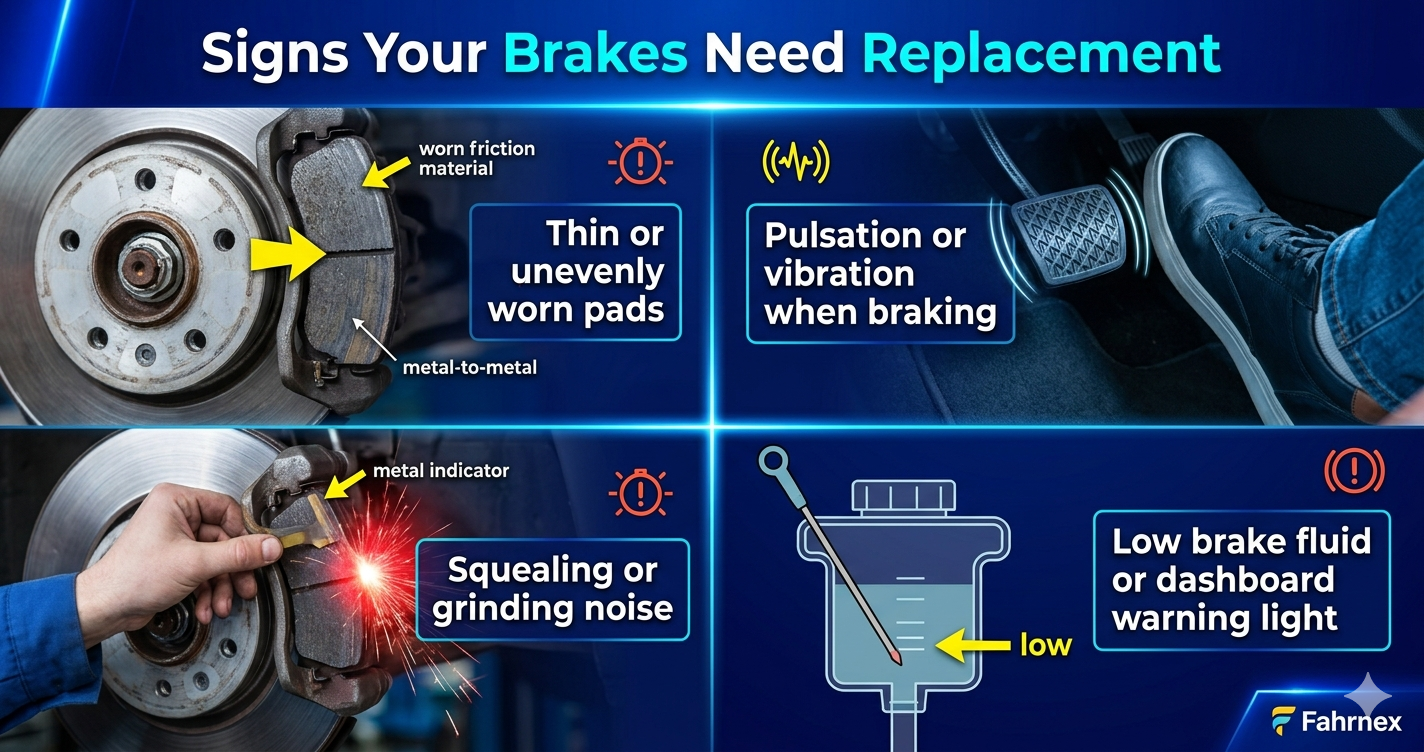
- One of the earliest signs of worn brake pads is a squealing or squeaking sound when braking.
Modern brake pads include a wear indicator that creates this sound when the pad material becomes too thin.
What it means:
- Brake pads are nearing end of life
- Replacement should be planned soon
If ignored, this can turn into grinding noise, which indicates severe damage.
2. Grinding Noise When Braking
- A grinding or scraping sound is a serious warning sign.
It usually means the brake pad material is completely worn out, causing metal-to-metal contact between the brake components.
What it means:
- Brake pads are fully worn
- Brake rotors may already be damaged
- Immediate replacement is required
Driving in this condition can be dangerous and costly.
3. Reduced Braking Performance
- If your vehicle takes longer to stop than usual, your brakes may be wearing out.
Common symptoms:
- Longer stopping distance
- Weak braking response
- Delayed deceleration
What it means:
- Brake pads or brake system components may no longer be working efficiently.
4. Vibrations or Shaking When Braking
If you feel vibration in the steering wheel or brake pedal, it may indicate:
- Warped brake rotors
- Uneven brake pad wear
- Overheating of brake components
What it means:
- The brake surface is no longer smooth, affecting braking performance and comfort.
5. Soft or Spongy Brake Pedal
- A brake pedal that feels soft or sinks too easily is a serious warning sign.
Possible causes:
- Air in brake lines
- Low brake fluid
- Worn hydraulic components
What it means:
- Your braking system is not building proper pressure and requires immediate inspection.
6. Car Pulling to One Side While Braking
- If your car drifts left or right when braking, it indicates uneven braking force.
Possible causes:
- Sticking brake caliper
- Uneven brake pad wear
- Brake fluid or hydraulic issues
What it means:
- Your vehicle stability is reduced, increasing accident risk.
7. Brake Warning Light on Dashboard
- Modern vehicles are equipped with sensors that trigger a brake warning light when pads are worn.
What it means:
- Brake pads are close to minimum thickness
- Immediate inspection is required
Never ignore dashboard brake warnings, even if the car feels normal.
8. Increased Stopping Distance
- If your car takes noticeably longer to stop, it is a clear sign of brake wear.
Possible causes:
- Thin brake pads
- Reduced friction material
- Brake fluid issues
What it means:
Your braking system efficiency is reduced and must be checked soon.
When Should You Replace Brake Pads?
You should consider replacing brake pads when:
- Thickness is below 3–4 mm
- Grinding or squealing noises appear
- Braking performance decreases
- Brake warning light turns on
Recommended maintenance:
Inspect your brakes every 10,000–15,000 km for safety.
How to Extend Brake Lifespan
You can make your brake pads last longer by:
- Avoiding sudden hard braking
- Driving smoothly in traffic
- Reducing unnecessary heavy loads
- Checking brake fluid regularly
- Scheduling regular maintenance checks
Final Thoughts
Brake problems usually develop gradually, starting with small warning signs like noise or vibration.
Recognizing these symptoms early can help you:
- Avoid expensive repairs
- Improve road safety
- Maintain vehicle performance
If you notice any of these warning signs, have your brakes inspected immediately by a qualified mechanic.
Frequently asked questions
How long do brake pads last?
Brake pads typically last between 20,000 and 70,000 km depending on driving conditions.
Can I drive with worn brake pads?
It is not recommended. Worn brake pads increase stopping distance and can damage brake rotors.
What does squeaking brakes mean?
It usually means brake pads are wearing out and need inspection or replacement soon.
Why does my car shake when braking?
This is often caused by warped brake rotors or uneven brake pad wear.
Keep exploring