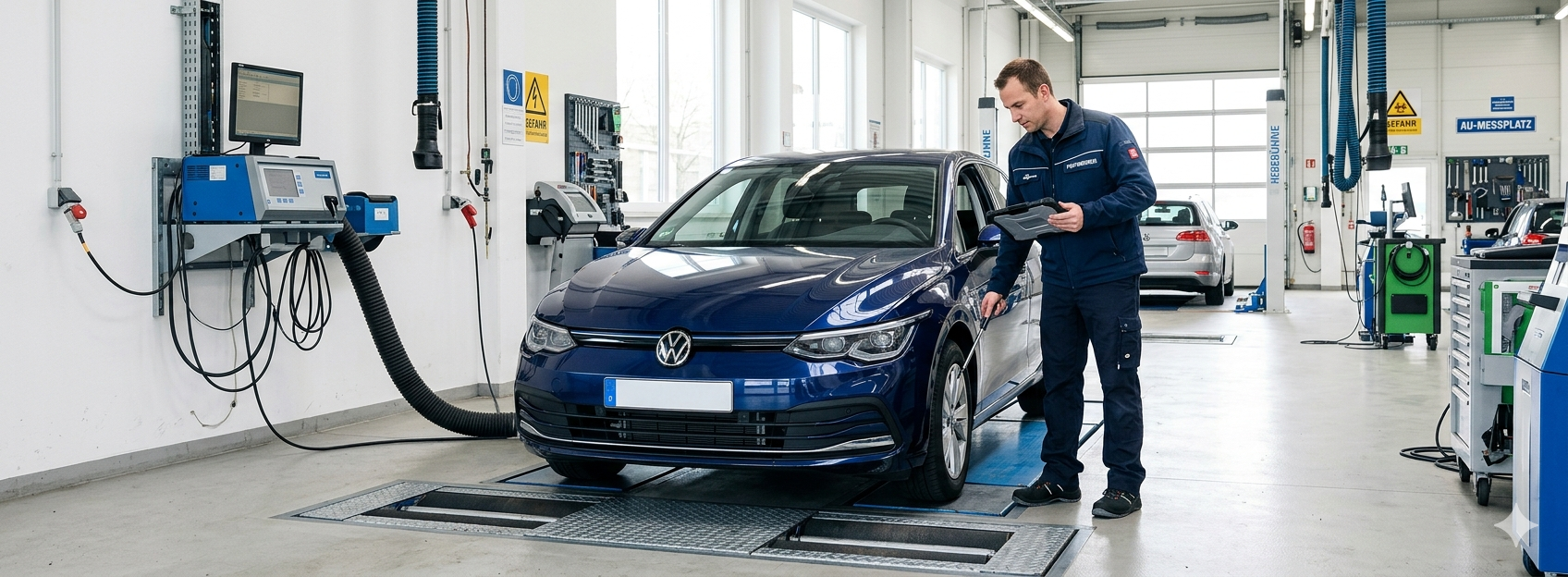
HU/AU Explained: What German Car Owners Should Know
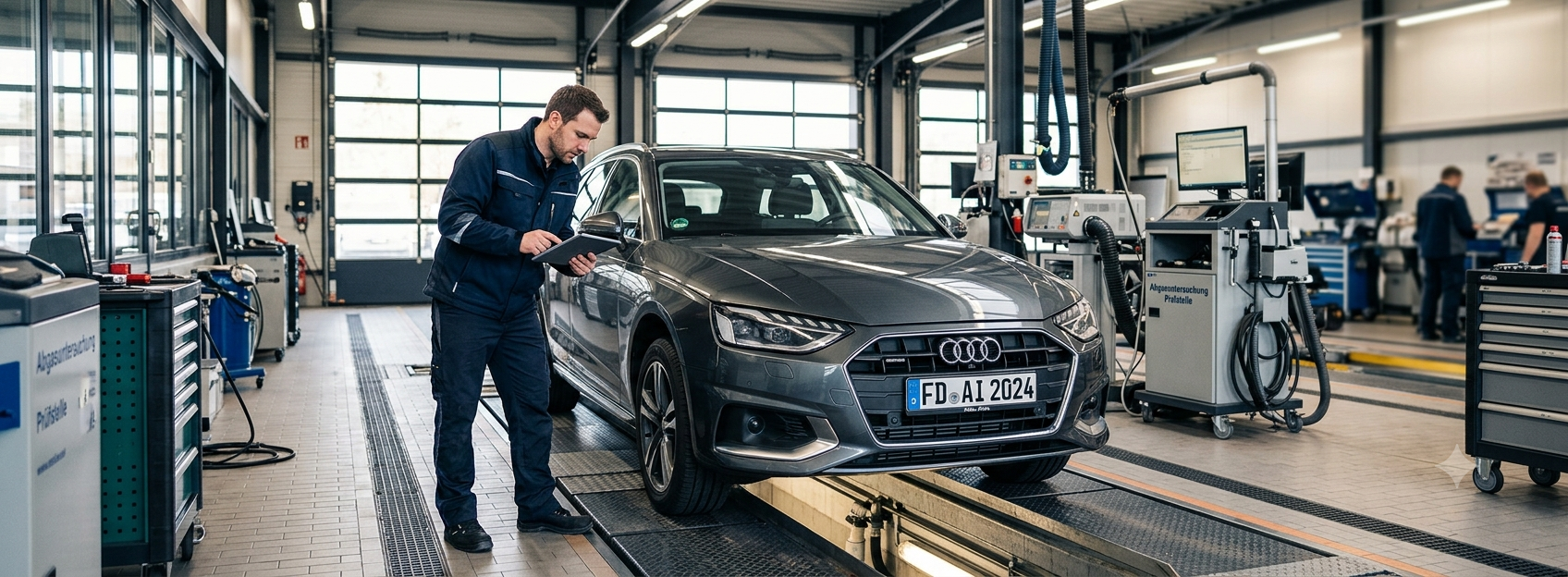
If you own a vehicle in Germany, you'll eventually encounter terms like HU, AU, and TÜV. For many expats and first-time vehicle owners, these terms can be confusing. Yet understanding them is essential because they determine whether your vehicle remains legally roadworthy.
HU focus
Main inspection
AU focus
Emissions check
In short
HU and AU often feel like one appointment in practice, but they cover different inspection focuses. That is why keeping the result documented matters.
Missing an inspection deadline can lead to fines, additional inspection fees, and potential complications if your vehicle develops safety-related issues.
In this guide, you'll learn:
- What HU and AU mean
- How Germany's vehicle inspection system works
- Which vehicles require inspections
- Typical costs and deadlines
- What happens if your TÜV expires
- How to prepare your vehicle and avoid common failures
Whether you're a long-term resident, company car driver, fleet manager, or new vehicle owner, this guide covers everything you need to know.
Prefer reading in German? See our complete guide: HU und AU in Deutschland erklärt: Alles, was Autofahrer wissen müssen.
What Is the Difference Between HU and AU?
The HU (Hauptuntersuchung) is Germany's mandatory roadworthiness inspection that checks whether a vehicle is safe and complies with legal requirements. The AU (Abgasuntersuchung) focuses on emissions testing and environmental compliance. Today, the AU is integrated into the HU process, but both terms are still commonly used together.
Keep the next vehicle deadline visible without scattered paperwork.
Fahrnex connects reminders, documents, and service history so inspections and maintenance are easier to plan before they become urgent.
Create a free accountWhat Do HU and AU Mean?
What Is the Hauptuntersuchung (HU)?
The Hauptuntersuchung, commonly abbreviated as HU, is Germany's mandatory technical inspection required under Section 29 of the German Road Traffic Licensing Regulations (StVZO §29).
The purpose of the inspection is to ensure that a vehicle:
- Is safe to operate
- Meets legal requirements
- Does not pose a risk to road users
- Complies with current technical standards
After successfully passing the inspection, the vehicle receives a new inspection sticker displayed on the rear license plate.
Although many people refer to the inspection simply as "TÜV," several authorized organizations can perform the inspection.
These include:
- TÜV
- DEKRA
- GTÜ
- KÜS
What Is the Abgasuntersuchung (AU)?
The Abgasuntersuchung (AU) is Germany's emissions test.
Its purpose is to verify that a vehicle meets environmental regulations and emissions standards.
During the inspection, examiners may check:
- Exhaust emissions
- Diesel particulate filters
- Catalytic converters
- Engine management systems
- On-board diagnostics (OBD)
- Emissions-related fault codes
Modern vehicles often undergo electronic diagnostics through the OBD system, allowing inspectors to identify emissions-related issues quickly.
Why Are HU and AU Usually Mentioned Together?
Historically, the emissions test and roadworthiness inspection were separate procedures.
Today, the AU forms part of the overall inspection process. However, the phrase "HU and AU" remains widely used by vehicle owners, workshops, and inspection organizations throughout Germany.
When people talk about:
- Getting the TÜV done
- Booking a TÜV appointment
- Renewing vehicle inspection
they are usually referring to the combined HU/AU process.
Which Vehicles Require HU and AU in Germany?
Passenger Cars
Private passenger vehicles must undergo their first inspection three years after initial registration.
After that, inspections are required every two years.
Standard schedule:
- First inspection: 36 months after registration
- Subsequent inspections: every 24 months
Motorcycles
Motorcycles are also subject to regular inspections.
Typical interval:
- Every 24 months
Inspectors pay particular attention to:
- Brakes
- Tires
- Suspension
- Lighting systems
Commercial Vehicles
Commercial vehicles often face stricter inspection requirements.
Depending on vehicle type and weight, additional safety inspections may be required between regular HU appointments.
Fleet operators should carefully monitor all inspection deadlines.
Company Cars
Company vehicles must comply with the same inspection regulations as privately owned vehicles.
Businesses operating multiple vehicles often use digital fleet management systems to track:
- Inspection deadlines
- Service records
- Vehicle documentation
- Maintenance schedules
How Does a HU/AU Inspection Work?
Many vehicle owners are surprised by how thorough Germany's inspection process can be.
The inspection typically covers several key areas.
Document Verification
Inspectors first verify:
- Vehicle registration documents
- Vehicle identification number (VIN)
- License plates
- Vehicle data
Any discrepancies can lead to additional checks.
Safety Inspection
The technical examination focuses on components that affect vehicle safety.
Braking System
Inspectors evaluate:
- Brake performance
- Brake lines
- Brake discs
- Parking brake
- Brake fluid condition
Brake-related defects are among the most common reasons for failing the inspection.
Lighting System
The following components are checked:
- Headlights
- High beams
- Turn signals
- Brake lights
- Fog lights
- License plate illumination
Even a simple burnt-out bulb can result in a defect notice.
Tires and Wheels
Inspectors assess:
- Tire tread depth
- Tire condition
- Wheel damage
- Tire specifications
Germany's legal minimum tread depth is 1.6 mm, although experts generally recommend replacing tires before reaching this limit.
Steering and Suspension
The inspection includes:
- Shock absorbers
- Steering components
- Axles
- Suspension parts
- Bearings
Any wear affecting vehicle stability may result in failure.
Emissions Testing
During the AU portion of the inspection, emissions performance is evaluated.
Special attention is given to:
- Diesel vehicles
- Vehicles with warning lights
- Older vehicles
- Cars with known emissions-related issues
How Much Do HU and AU Cost in Germany?
Inspection costs vary depending on:
- Vehicle type
- Inspection organization
- Region
- Additional testing requirements
Typical costs for passenger cars include:
| Service | Typical Cost |
|---|---|
| HU including AU | €140–€180 |
| Re-inspection | €15–€40 |
| Motorcycle inspection | €70–€100 |
Prices may increase over time, so it's advisable to check current rates when booking.
TÜV, DEKRA, GTÜ, and KÜS Comparison
TÜV
Germany's most recognized inspection organization with nationwide coverage.
DEKRA
Widely available throughout Germany and especially prominent in eastern regions.
GTÜ
Offers inspections through numerous partner workshops.
KÜS
Provides similar inspection services with extensive regional coverage.
All organizations must follow the same legal inspection standards.
What Happens If Your TÜV Expires?
- Missing an inspection deadline can become costly.
The consequences depend on how long the inspection has been overdue.
If your inspection deadline has already passed, it's important to understand the potential consequences. Our detailed guide on what happens if your TÜV expires in Germany explains fines, penalties, additional inspections, and what steps to take to remain compliant.
Potential Consequences
- Warning fines
- Administrative penalties
- Additional inspection fees
- Mandatory extended inspections
- Potential points in Flensburg for significant delays
Extended Inspection
- If the inspection is overdue by more than two months, an extended inspection may be required.
This increases both the duration and cost of the appointment.
Re-Inspection
- Vehicles that fail due to significant defects must be repaired and presented again within the specified timeframe.
A re-inspection fee will usually apply.
Insurance Considerations
- An expired inspection sticker does not automatically invalidate insurance coverage.
However, if a vehicle with known safety defects contributes to an accident, insurance disputes may arise.
Common Reasons Vehicles Fail the HU
- Many failures result from relatively simple issues that could have been fixed beforehand.
Common reasons include:
Faulty Lighting
- Burnt-out bulbs
- Misaligned headlights
- Broken indicators
Brake Problems
- Worn brake pads
- Uneven braking performance
- Damaged brake components
Tire Defects
- Insufficient tread depth
- Uneven wear
- Sidewall damage
Oil Leaks
Inspectors frequently identify:
- Engine oil leaks
- Transmission fluid leaks
- Damaged seals
Emissions Problems
Common causes include:
- Faulty sensors
- Catalytic converter issues
- Diesel particulate filter problems
- Active engine warning lights
10 Practical Tips to Pass the HU and AU First Time
Preparation significantly increases the likelihood of passing.
1. Check all exterior lights.
2. Inspect tire tread depth.
3. Verify tire pressure.
4. Replace worn windshield wipers.
5. Top up all fluids.
6. Investigate dashboard warning lights.
7. Listen for brake noises.
8. Warm up the engine before the inspection.
9. Bring all required vehicle documents.
10. Fix minor defects before your appointment.
A simple €5 bulb replacement today can save the inconvenience and cost of a re-inspection later.
Digital Vehicle Management and TÜV Reminders
Keeping track of inspections becomes increasingly difficult when managing multiple vehicles.
Keeping inspection reports, registration documents, insurance records, and maintenance receipts organized can significantly reduce administrative stress. Learn how to organize vehicle documents digitally and keep all important records accessible whenever you need them.
Digital vehicle management platforms such as Fahrnex help vehicle owners organize:
- Inspection deadlines
- Maintenance schedules
- Vehicle records
- Registration documents
- Service history
- Fleet information
Automated reminders can reduce the risk of missing critical TÜV appointments and help maintain complete vehicle records.
Conclusion
HU and AU inspections are an essential part of vehicle ownership in Germany. They help ensure road safety, environmental compliance, and legal vehicle operation.
Understanding inspection schedules, costs, and preparation requirements can save time, money, and unnecessary stress.
By maintaining your vehicle properly and tracking important deadlines, you can significantly improve your chances of passing on the first attempt.
With Fahrnex, you can keep maintenance records, vehicle documents, and TÜV deadlines organized in one place.
Frequently asked questions
HU/AU Explained: What German Car Owners Should Know?
HU and AU are often mentioned together, but many owners do not fully understand what each part covers.
What should drivers or fleet teams do next?
Understand the role of both inspection elements before your appointment. Treat the inspection result as part of your ongoing maintenance record, not a one-off paper event. Fahrnex helps keep these tasks visible in one place.
How often do vehicles need a HU inspection in Germany?
Most passenger cars require their first inspection three years after registration and every two years thereafter. Commercial vehicles may have different schedules depending on vehicle type and regulations.
Is the AU still mandatory?
Yes. The emissions test remains mandatory and forms part of the overall HU inspection process. Vehicles must comply with current environmental standards to pass.
How much does a re-inspection cost?
Most re-inspections cost between €15 and €40, depending on the inspection organization and the defects involved.
How long can you drive with an expired TÜV?
Driving with an expired inspection sticker is not recommended. Penalties increase as the delay becomes longer, and significant delays may trigger additional inspection requirements.
Can you legally drive without a valid HU?
The vehicle generally remains registered, but operating it without a valid inspection may result in fines and legal consequences. If serious defects are identified, authorities may restrict vehicle use.
Keep exploring